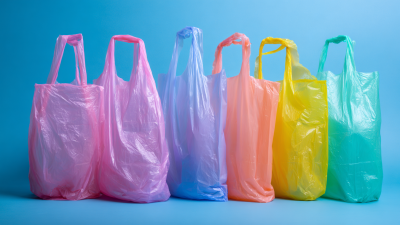
China’s polythene packaging industry caters to a wide range of customers—retailers, food producers, distributors, and industrial buyers alike. But when it comes to picking a manufacturer, it’s really not just about comparing prices. You’ll want to take a closer look at things like product specs, how much they can produce, quality checks, options for customization, and how responsive they are during sampling. Honestly, details matter more than you might think.
Here’s a good rule of thumb: even a thin sample might feel fine in your hand, but once you fill it up, it could stretch unevenly or not hold up as well. So, don’t forget to ask suppliers about the thickness, dimensions, sealing strength, printing details, and what the packaging is meant for. It’s smart to request actual samples, get their written specs, and make sure you get clear answers about their production timelines. These simple but important checks will help you compare suppliers in a much more meaningful way.
Of course, China has tons of manufacturers, but their capabilities can vary quite a bit. Some focus mainly on high-volume, standard-sized bags. Others are more flexible—offering custom sizes, different colors, printing options, or even specialized packaging formats. The right choice really depends on your order size, what your product needs, and how much support your team is looking for. It’s always a good idea to verify each company’s claims directly and see if their communication is clear and consistent. Remember, no factory profile should replace doing your own due diligence.
This guide is designed to help you understand what to look for when browsing companies in China that produce Polythene Bags. It also lays out some practical steps for comparing suppliers—from evaluating samples to checking if they’re ready to produce your order. However, I should mention—this isn’t based on a verified industry expert quote. Trying to attribute a direct statement from a named specialist here might be a bit misleading. Ultimately, a trustworthy supplier decision hinges on documented evidence, not just on a flashy quote or slogan.
Define Polythene Bags by PE Grade, Film Thickness, and End Use
Polythene bags should be specified by resin grade, thickness, and job—not by appearance alone. HDPE usually feels crisp and works well for lightweight carrier or produce bags. LDPE is softer and clearer, while LLDPE often offers better stretch and puncture resistance for heavier loads. Ask suppliers for resin type and film data; “premium PE” is not a useful technical specification.
Thickness changes handling. Thin films around 15–25 microns suit light, dry items; roughly 40–80 microns may be considered for heavier goods, depending on bag design and load. These are working ranges, not guarantees: gussets, seals, and recycled content can affect performance. End use matters, too. OECD’s Global Plastics Outlook (2022) estimates packaging made up 40% of plastic waste generated in 2019, so right-sizing bags can reduce unnecessary material. But a thinner bag that tears is no improvement.
Tips: Share the product’s weight, sharp edges, storage conditions, and preferred bag dimensions when requesting samples. Test filled bags by lifting and checking the seals. Real use can surprise you. A specification that looks tidy on paper may still need revision after a warehouse trial.
Polythene Bags: Typical Film Thickness by End Use
Illustrative thickness ranges for common polyethylene (PE) bag applications. Actual specifications vary by load, bag dimensions, and local requirements.
Ranges shown in micrometres (µm). Lightweight produce bags are often made from HDPE or LLDPE; carrier bags, refuse sacks, and mailers commonly use HDPE, LDPE, or LLDPE blends, depending on the required strength and feel. These ranges are indicative, not a universal product standard.
Map China’s PE Bag Supply Chain from Resin to Finished Packaging
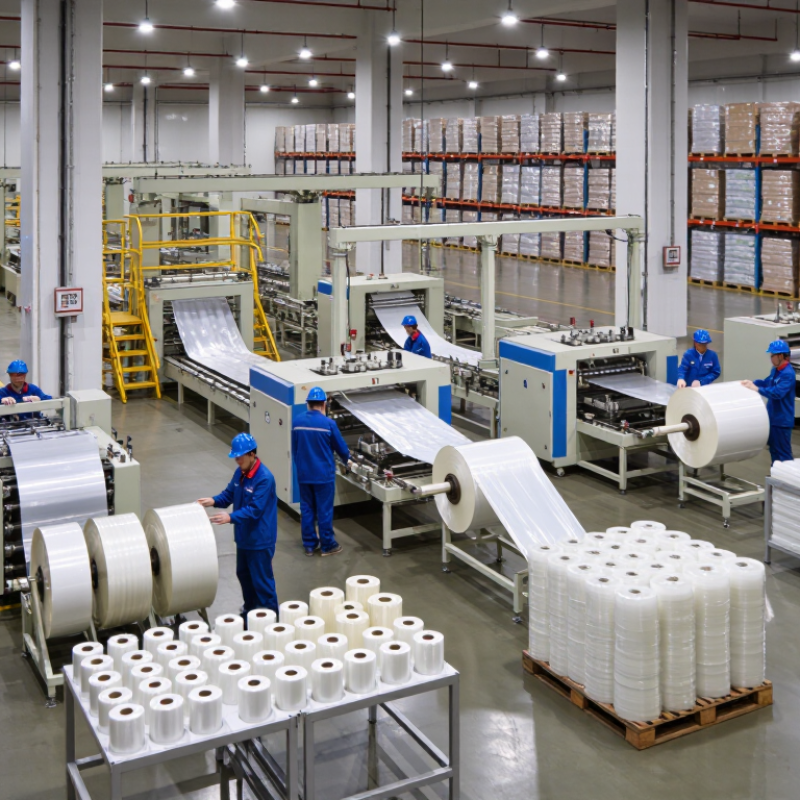
China’s PE bag supply chain begins with polyethylene resin, usually produced from petrochemical feedstocks and supplied as pellets. Converters melt and blow the resin into thin film, then print, cut, and seal it into finished bags. The National Bureau of Statistics of China reported 74.885 million tonnes of plastic products in 2023. This broad category is not a bag-only figure, but it shows the scale of the country’s downstream plastics industry. For buyers, the practical question is how each factory controls material consistency, film thickness, and sealing strength.
A reliable sourcing review follows the material through each stage. Ask whether resin grades are documented, whether recycled content is declared, and how production batches are checked. Request sample bags and compare their dimensions, load performance, and seal quality. Food Polythene Bags need extra attention to traceability and suitability for their intended use. China’s supply chain is extensive, but visibility can vary between resin suppliers, film extruders, and bag converters. That gap deserves scrutiny.
Tips: Ask for a clear process flow, batch records, and test results. Check that samples match the agreed specification. Small details matter: a weak side seam can undo an otherwise sound production run.
Rank Manufacturers by Annual Capacity, MOQ, Defect Rate, and Lead Time
Comparing China’s polythene bag manufacturers requires more than sorting factories by annual capacity. Capacity indicates whether a supplier can handle recurring orders, but published figures may describe installed equipment rather than actual available production. Ask for recent output records and confirm whether capacity covers your bag dimensions, thickness, and printing requirements. Numbers need context.
A practical scorecard can rank annual capacity, minimum order quantity, defect rate, and lead time separately. For example, request defect data from recent production runs, not just a general quality claim. Clarify how defects are counted, and whether the rate includes sealing failures, uneven thickness, or print misalignment. Small trial orders can reveal useful details, though they may not represent full-scale production. There is a limitation.
MOQ matters when testing new packaging. A low minimum can reduce inventory risk, while a larger order may improve unit pricing. Compare quoted lead times against sample approval, production, and shipping stages. Polypropylene Bags may require different specifications and production planning from polythene bags, so confirm the material before comparing quotes. No single ranking fits every buyer; a high-capacity factory may be a poor match for a short run. Recheck the figures.
Compare China’s Top PE Bag Producers by Output and Export Markets
Who Are the Top Polythene Bags Manufacturers in China?
China’s leading PE bag producers differ mainly in output capacity, automation, and export coverage. Large factories often operate several blown-film lines and produce hundreds or thousands of tonnes monthly. This scale supports container orders, consistent thickness, and faster repeat production. However, higher output does not always mean better service.
Mid-sized manufacturers may offer stronger customization. They can adjust bag dimensions, sealing strength, film clarity, and printing details more quickly. Their monthly output is usually lower, but communication may be more direct. That matters for trial orders. In supplier audits, buyers should review line capacity, quality records, and actual production samples. Factory claims can sound impressive.
Export markets also reveal useful differences. Coastal producers commonly serve North America, Europe, Southeast Asia, the Middle East, and Africa. Each market may require different packaging specifications, testing documents, and labeling practices. Export experience with a buyer’s region can reduce delays and document errors. Request recent shipment references, inspection reports, and clear material declarations.
High-volume factories often focus on standard shopping bags, garbage bags, and industrial liners. Custom projects may receive less attention during peak seasons. Smaller producers can be more flexible, yet their quality may vary between batches. This is an uncomfortable trade-off. A practical comparison should consider output, market experience, production control, lead time, and communication reliability—not price alone.
Verify Compliance with ISO 9001, GB/T 4456-2008, and ASTM Tests
Choosing polythene bag manufacturers in China requires more than comparing prices or production photographs. ISO’s 2022 Survey recorded over 1.2 million ISO 9001 certificates worldwide. However, certification does not prove every Food Bags batch is consistent. Request the current certificate, issuing body, scope, and recent surveillance records. The factory address should match the audited production site.
For polyethylene packaging, verify production against GB/T 4456-2008. Check film thickness, sealing strength, appearance, and permitted tolerances through controlled sampling. ASTM tests add useful evidence. ASTM D882 measures tensile properties, while ASTM D1709 evaluates dart impact resistance. ASTM D1894 can assess film friction during packing-line handling. Ask for dated laboratory reports, sample identification, test conditions, and equipment calibration records.
Look closely at the factory floor. Rolls should carry batch codes, resin details, and production dates. Operators should record temperature, thickness, and seal checks, not rely on memory. The OECD Global Plastics Outlook reported that packaging represented about 40% of plastic waste in 2019. That figure makes material control important, although it does not replace a full environmental assessment. A certificate can still hide weak daily execution. I would request a retained sample and repeat one critical test independently. Small gaps often appear there.
Who Are the Top Polythene Bags Manufacturers in China? - Verify Compliance with ISO 9001, GB/T 4456-2008, and ASTM Tests
Use this evidence-based checklist to assess manufacturers. No company rankings or company-specific certifications are asserted here; verify each supplier’s documents, product scope, and test results directly.
| Assessment area | Standard or evidence to check | What to verify | Buyer’s practical check |
| Quality management | ISO 9001:2015 certificate | Confirm the certificate is current, issued by an accredited certification body, and covers the manufacturing site and relevant activities. ISO 9001 certifies a quality management system, not an individual bag or product. | Check the certificate number and validity with the issuer or accreditation-body directory; match the legal entity and site to the supplier’s quotation and contract. |
| Polyethylene film specification | GB/T 4456-2008 | This Chinese national standard concerns polyethylene blown film for packaging. Ask the supplier to identify the edition used and provide the applicable product specification and inspection records. | Check the current status and any replacement edition in an authoritative standards catalogue. Do not assume a reference to the 2008 edition alone demonstrates compliance with current requirements. |
| Tensile properties | ASTM D882 | Test method for tensile properties of thin plastic sheeting, including film specimens. Results depend on specimen preparation and test conditions. | Request a report for the same film construction and thickness as the ordered bags, with test direction, specimen thickness, conditioning, and results stated. |
| Optical properties | ASTM D1003 | Test method for haze and luminous transmittance of transparent plastics, where those properties are relevant to the film and product. | Specify the required optical property and acceptance limit in the purchase specification; the method itself does not set a universal pass/fail limit. |
| Impact resistance | ASTM D1709 | Test methods for the impact resistance of plastic film by the free-falling dart method. | Check the method, dart procedure, sample thickness, and reported result. Agree the required performance level for the intended bag use. |
| Film-to-film friction | ASTM D1894 | Test method for static and kinetic coefficients of friction of plastic film and sheeting. | Confirm that the report specifies the tested surfaces and conditions; relate the agreed friction range to bag opening, stacking, and converting needs. |
| Batch traceability and consistency | Batch records, inspection reports, and retained samples | Evidence that production lots can be linked to raw materials, manufacturing dates, inspection results, and the finished goods supplied. | Request a sample lot record and define incoming inspection, defect criteria, sampling frequency, and corrective-action expectations before placing an order. |
| Test-report reliability | Laboratory reports and test-method editions | Reports should identify the sample, test method and edition, date, measured results, and laboratory. Independent laboratory testing can provide additional assurance. | Match the report sample to the quoted product and confirm any claimed laboratory accreditation and test scope with the relevant accreditation body. |
ASTM methods describe how particular properties are tested; they do not, by themselves, establish universal acceptance limits. Define required limits, sampling plans, product dimensions, and intended-use requirements in the purchase specification.
Check the 0.025 mm Thickness Threshold for China’s Plastic Bags
For buyers comparing polythene bag manufacturers in China, 0.025 mm means 25 microns. It is a useful inspection threshold, not a guarantee of strength. A bag’s performance also depends on resin, film structure, seals, and load. Check thickness at several points with a calibrated gauge; a single reading can miss thin spots. Small differences matter.
China’s GB/T 21661-2020 is a national standard covering plastic shopping bags, but buyers should confirm the applicable product specification rather than assume one thickness fits every bag. The OECD’s Global Plastics Outlook reports that global plastics use reached 460 million tonnes in 2019. That scale makes precise material specifications and waste-conscious purchasing increasingly relevant.
Ask suppliers to state nominal thickness, tolerance, test method, and whether measurements refer to one film layer or the bag’s total film.
Inspect a filled sample. Lift it by the handles, then check the bottom seam for whitening, stretching, or pinholes. Request a batch test record and verify it against an independently measured sample.
Polythene Bag Packing should protect goods without relying on excess film. A 25-micron target can be a practical starting point, but it is not a substitute for testing. Honestly, thickness alone is an imperfect shortcut.
Evaluate Recycled Content, EN 13432 Claims, and EPR Readiness
When evaluating polythene bag manufacturers in China, ask for recycled-content evidence, not just a percentage on a product sheet. The OECD’s Global Plastics Outlook reported that only 9% of global plastic waste was ultimately recycled in 2019. That figure makes traceability important. Request batch records, resin specifications, and evidence linking recycled feedstock to finished bags. A factory tour can help, but paperwork matters too.
Treat EN 13432 claims with care. The standard assesses packaging for industrial composting, including biodegradation and disintegration under controlled conditions. It does not mean a bag will break down quickly in a garden or ordinary landfill. Ask for the test report and certificate covering the exact bag structure, inks, and additives. Small changes can matter. A vague logo is not enough.
EPR readiness is another practical test. Ask whether the supplier can provide packaging weights, material breakdowns, recycled-content records, and consistent product data for reporting. OECD analysis highlights how policy measures, including extended producer responsibility, can shift packaging costs toward producers. Requirements differ by market, so suppliers should support accurate reporting rather than promise universal compliance. One gap may remain: data can be strong for resin, yet incomplete for printing or handles. That deserves a follow-up before purchase.
Custom-Shaped Food-Safe Bags from China: Supplier Insights Informed by Smithers’ *The Future of Global Packaging to 2028*
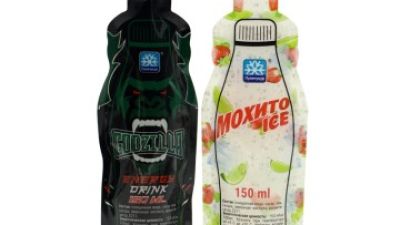
Custom-shaped food-safe bags offer a practical way for packaging suppliers in China to help products stand out while meeting everyday protection and presentation needs. In a market where packaging must balance shelf appeal with functionality, distinctive contours can reflect a product’s identity, support convenient handling, and create a memorable first impression. Shapes and dimensions can be tailored for different uses, while suitable food-contact materials and careful production help make the bags appropriate for packaged foods.
Looking toward the packaging developments discussed in Smithers’ *The Future of Global Packaging to 2028*, suppliers can focus on adaptable designs, reliable performance, and consumer-facing appeal. High-quality manufacturing and dependable seals help limit exposure to moisture and oxygen, preserving product freshness when the packaging is correctly specified for its contents and storage conditions. Shaped bags can also serve cosmetics and industrial products, with material and barrier choices adjusted to each application. For buyers, working with an experienced China supplier can provide options for customization, production consistency, and packaging that combines distinctive shelf presence with practical protection.
FAQS
Specify the resin grade, film thickness, dimensions, and intended use. Appearance alone is not enough. A crisp feel often suggests HDPE. Softer, clearer film may indicate LDPE. LLDPE can provide stronger stretch and puncture resistance. Ask for technical data.
Films around 15–25 microns may suit light, dry items. Films around 40–80 microns may suit heavier goods, depending on design. These are working ranges, not guarantees. Seals and gussets matter.
Yes, but only when it survives real handling. A torn bag creates waste and frustration. Test filled bags before reducing thickness. Lift them, inspect seals, and repeat the trial.
Share product weight, sharp edges, bag dimensions, and storage conditions. Mention stacking, outdoor exposure, and expected handling. Details matter. A smooth product can still damage thin film.
Review production lines, monthly capacity, quality records, and recent samples. Large factories may offer steady output and faster repeat orders. Mid-sized factories may adjust sizes and seals more quickly. Bigger is not automatically better.
Yes. Regional experience can reduce document errors and delivery delays. Ask for recent shipment references and inspection records. Specifications and labeling may differ between markets. Claims can sound impressive.
Request batch records, resin specifications, and traceability documents. The stated percentage should connect to the finished bags. A factory visit helps, but paperwork still matters. Some records may remain incomplete.
Request test reports covering the exact bag structure, inks, and additives. Industrial composting claims do not guarantee breakdown in gardens or landfills. A vague symbol proves little. Recheck every changed component.
Conclusion
Choosing the right Polythene Bags manufacturer in China requires more than comparing prices. Buyers should first define the required polyethylene grade, film thickness, bag format, and end use, then understand how resin sourcing, film extrusion, printing, and converting affect the finished product. A practical supplier comparison should consider annual capacity, minimum order quantity, defect rate, and lead time alongside output consistency and experience serving relevant export markets.
Before placing an order, verify quality systems and product testing against applicable requirements, including ISO 9001, GB/T 4456-2008, and relevant ASTM methods. Confirm how the 0.025 mm thickness threshold applies to the intended bag and request clear measurement records. Finally, assess recycled-content documentation, substantiate any EN 13432 compostability claims, and review the supplier’s readiness to provide information needed for extended producer responsibility programs. These checks help buyers select a capable producer while balancing performance, cost, and packaging sustainability goals.