Leave Your Message
China continues to be a go-to source for all kinds of flexible Plastic Packaging—think shopping bags, trash sacks, and industrial liners. But, let's be honest, global buyers aren’t just after eye-catching quotes. They need reliable info—verified production capacity, consistent resin quality, accurate printing, and documentation that shows everything’s up to standard.
According to the OECD’s Global Plastics Outlook, worldwide plastic output hit around 460 million tonnes in 2019, almost double what it was back in 2000. Interestingly, only about 9% of that plastic waste actually gets recycled. Now, that number isn’t specific to bags, but it paints a clear picture of the pressure every supplier in the Plastic Bag supply chain is under. The UNEP’s Turning off the Tap report pushes the idea of reusing, designing smarter products, and managing waste more responsibly.
This guide focuses on evaluating China-based manufacturers with practical purchasing tips. Things like factory experience, the equipment they have, quality control processes, material choices, export history, and how reliable their communication is—all these matter. Buyers should always ask for samples, technical details, test reports, and clear info on recycled or biodegradable content. A green claim without proof? It’s just hot air.
Little details can make a big difference. A good supplier will explain film thickness in microns, bag sizes, handle strength, packaging quantities, and what tolerances they accept. Certifications like ISO 9001 can help give some confidence in their process, but don’t forget—they’re no substitute for actual product testing. And if you’re dealing with food-contact items, you’ll need extra verification specific to where you’re selling.
You might see search phrases like Plastic Bag Plastic Bag. But when it comes to sourcing, staying precise is key. No factory is perfect, and performance can shift over time. Plus, info you find online might get outdated pretty quickly. It’s always best for buyers to verify current samples, review audit reports, and double-check compliance documents before sealing any deals.
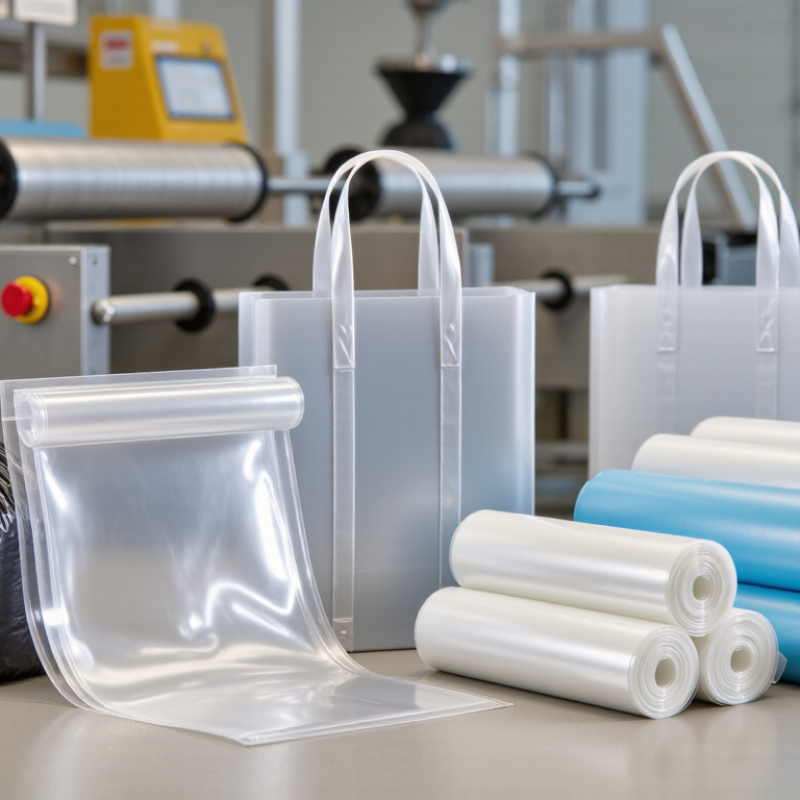
A leading Chinese plastic bag manufacturer is defined by controlled performance, not a polished catalog. The OECD’s Global Plastics Outlook reports that global plastic waste reached 353 million tonnes in 2019. Only 9% was recycled. That statistic changes the buying conversation. A serious factory shows resin certificates, thickness records, seal-strength results, and batch traceability. During a plant audit, buyers should inspect film rolls, calibrated gauges, clean storage, and rejected bags. Small details reveal repeatability.
For a Bag Plastic Bag search, specifications must become measurable: 50-micron film, an 8-kilogram load, handle dimensions, and delivery tolerance. Production experience also matters. Experienced engineers adjust temperature, line speed, and ink adhesion when samples fail. They should explain the failure plainly, not hide it behind attractive samples. The ISO 9001 framework supports documented quality management, but certification alone cannot prove daily discipline. That is often missed.
Environmental competence needs evidence, too. UNEP’s Turning off the Tap report identifies reduction, reuse, and improved recycling as essential interventions. A credible supplier can provide recycled-content documentation, material declarations, and realistic end-of-life guidance. Claims such as “eco-friendly” need boundaries. A bag may use less material yet still lack a viable collection route. I would also question optimistic capacity promises. A production schedule, sample approval record, and communication log are more useful than a grand sales presentation. No factory is perfect. The best partner admits a weakness, measures it, and improves the next shipment.
| Evaluation Dimension | What a Leading Manufacturer Should Demonstrate | Relevant Standards or Requirements | Evidence Global Buyers Should Request | Why It Matters |
|---|---|---|---|---|
| Product Range | Capability to produce shopping bags, garbage bags, mailer bags, food-contact bags, courier bags, drawstring bags, and custom packaging in different sizes and constructions. | Product specifications should define film structure, thickness, dimensions, sealing method, handle design, printing, and packaging format. | Product catalogue, technical drawings, material specifications, and representative samples. | A broad but well-controlled product range helps buyers consolidate sourcing while maintaining consistent specifications. |
| Material Selection | Controlled use of materials such as HDPE, LDPE, LLDPE, PP, recycled polyethylene, and certified compostable or biodegradable materials where appropriate. | Material choice must match the required strength, flexibility, transparency, temperature resistance, and end-use regulations. | Resin declarations, recycled-content documentation, safety data where applicable, and batch traceability records. | Correct material selection affects bag performance, regulatory compliance, cost, and environmental claims. |
| Film Thickness and Tolerance | Documented controls for nominal thickness, width, length, sealing strength, and allowable production tolerances. | Thickness should be stated in micrometres or gauge, with inspection methods agreed before production. | Incoming-material inspection records, in-process inspection reports, and third-party test results. | Consistent thickness reduces leakage, tearing, rejected shipments, and unexpected material consumption. |
| Printing Capability | Reliable flexographic or gravure printing with controlled colour registration, ink adhesion, barcode readability, and artwork management. | Food-contact applications may require compliant inks and an appropriate functional barrier, depending on the destination market and intended use. | Pre-production artwork approval, colour standards, print samples, and adhesion or rub-resistance test results. | Stable printing protects brand presentation and prevents packaging information from becoming unreadable during transport or use. |
| Quality Management | Documented procedures covering raw-material inspection, production control, final inspection, corrective actions, and customer complaints. | ISO 9001 is a widely recognized quality-management framework, although certification should be verified for the relevant facility and scope. | Valid certificate, audit report, inspection checklist, non-conformance records, and corrective-action examples. | A formal quality system improves repeatability and gives buyers a structured way to manage production risks. |
| Food-Contact Compliance | Separate controls for materials, additives, inks, adhesives, production hygiene, and packaging used for food-contact applications. | Depending on the destination, requirements may include EU Regulation (EC) No. 1935/2004, EU Regulation No. 10/2011 for plastic food-contact materials, or applicable United States FDA requirements such as 21 CFR provisions for polymers. | Declaration of compliance, migration-test reports, material composition information, and facility hygiene procedures. | Food-contact compliance is destination-specific and cannot be established by a generic “food grade” statement alone. |
| Recycled Content | Ability to control post-consumer or post-industrial recycled content without compromising the agreed mechanical and visual properties. | Recycled-content claims should identify the percentage, source, calculation method, and applicable chain-of-custody requirements. | Supplier declarations, batch records, mass-balance calculations where relevant, and independent certification when requested. | Transparent documentation helps buyers substantiate sustainability claims and meet customer or regulatory requirements. |
| Compostable or Biodegradable Claims | Clear distinction between recyclable, biodegradable, industrially compostable, and home-compostable products. | Common reference standards include EN 13432 for packaging recoverable through industrial composting and ASTM D6400 for compostable plastics intended for municipal or industrial aerobic composting facilities. | Valid certification, test reports, product composition information, and disposal instructions suitable for the destination market. | Environmental terminology is regulated or restricted in many markets; unsupported claims can create legal and reputational risk. |
| Testing and Inspection | Routine testing of tensile strength, elongation, tear resistance, puncture resistance, seal strength, drop performance, and leak resistance according to the product application. | Test methods should be defined in the purchase specification and performed consistently using calibrated equipment. | Certificate of analysis, laboratory records, calibration certificates, and pre-shipment inspection reports. | Performance testing verifies whether the finished bags meet the buyer’s functional requirements rather than relying only on appearance. |
| Production Capacity | Capacity should be stated by product type, material, size, printing requirement, and monthly or annual output rather than as one unrestricted figure. | Capacity claims should reflect available extrusion, printing, bag-making, inspection, and packing resources. | Capacity statement, production schedule, equipment list, and evidence of recent comparable orders. | Capacity transparency helps buyers assess whether the manufacturer can support regular replenishment and seasonal demand. |
| Lead-Time Control | Defined timelines for artwork approval, tooling or cylinder preparation, raw-material procurement, production, inspection, and export packing. | Lead times should distinguish between repeat orders and new custom orders and should identify assumptions about material availability. | Production schedule, order-confirmation format, shipment history, and documented contingency procedures. | Reliable lead-time management is essential for retail, e-commerce, food-service, and promotional packaging programs. |
| Packaging and Export Readiness | Products should be packed to protect against moisture, deformation, contamination, and printing damage during international transportation. | Export cartons, pallet configuration, shipping marks, carton dimensions, and weight limits should follow the buyer’s logistics requirements. | Packing specification, carton photos, pallet plan, loading records, and shipping-document samples. | Proper export packaging reduces transit damage and supports efficient warehouse handling and customs clearance. |
| Traceability | Each production lot should be traceable to raw materials, production date, machine or line, operators, inspection results, and shipment records. | Traceability procedures should cover both conventional and recycled or specialty materials. | Lot-code examples, production records, material certificates, and mock-recall documentation. | Traceability enables faster investigation, targeted corrective action, and more effective product-recall management. |
| Environmental Management | Documented control of energy use, scrap, water, emissions, waste handling, and production efficiency. | ISO 14001 is a recognized environmental-management framework; certification scope should match the manufacturing site. | Environmental certificate, waste records, scrap-recycling data, energy records, and relevant permits. | Environmental management supports responsible sourcing and helps buyers evaluate the credibility of sustainability programs. |
| Commercial Transparency | Clear quotations showing material, thickness, dimensions, printing, packaging, tooling, minimum order quantity, payment terms, and delivery terms. | Pricing should identify whether it is based on weight, piece count, material index, or another agreed method. | Formal quotation, specification sheet, proforma invoice, sampling policy, and change-control procedure. | Transparent commercial terms reduce hidden costs and prevent disagreements when specifications or raw-material prices change. |
| Buyer Verification | Willingness to support factory audits, sample approval, pre-shipment inspection, independent laboratory testing, and corrective actions. | Verification should be based on the buyer’s destination market, product application, risk level, and contractual requirements. | Audit access, approved sample, inspection protocol, test plan, and signed product specification. | Independent verification turns supplier claims into measurable evidence before large-scale purchasing. |
Buyer note: Certifications, test reports, and regulatory documents should be checked for validity, issuing organization, covered products, manufacturing site, and destination-market applicability before procurement.
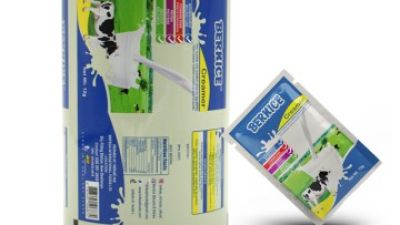
Attractive printed plastic roll film is reshaping how food manufacturers communicate quality at the point of sale. According to Smithers’ industry research, flexible packaging continues to expand because of its lightweight structure, efficient material use, and strong printing potential. High-resolution gravure or flexographic printing can reproduce vivid colors, nutritional information, preparation instructions, and carefully controlled visual elements on milk powder packaging. This creates a more distinctive shelf presence while allowing roll film to run efficiently on modern form-fill-seal equipment.
For milk powder, visual appeal must be supported by dependable protection. The recommended customer packaging film uses a multilayer structure combining a sealable plastic layer with an aluminum foil barrier. The plastic layer helps provide heat-sealing performance, puncture resistance, and moisture protection, while aluminum foil blocks light and oxygen that may accelerate oxidation or affect flavor and nutrition. Data from the Food and Agriculture Organization emphasizes that moisture and oxygen control are essential factors in preserving the quality of powdered foods during storage and distribution.
Research from MarketsandMarkets also identifies barrier performance, convenience, and improved shelf presentation as major drivers in the flexible packaging sector. Printed roll film can integrate tear notches, strong seals, and clear product identification without sacrificing graphic quality. For milk powder producers, this balance of protection and attractive presentation supports longer shelf life, more consistent packaging performance, and stronger consumer recognition across retail environments.
Request resin certificates, thickness records, seal-strength tests, and batch traceability. Inspect film rolls, gauges, storage areas, and rejected bags. Small details matter.
Use measurable details, such as 50-micron film, an 8-kilogram load, handle dimensions, and delivery tolerance. Include product weight and sharp edges. Vague requests create avoidable problems.
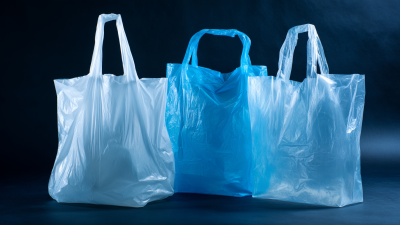
Flat bags suit garments, documents, and lightweight parts. T-shirt bags offer stiffness for retail use. Drawstring bags fit laundry and promotional kits.
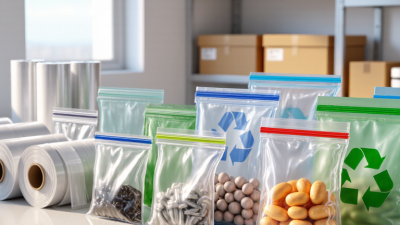
Zipper bags help protect samples, spare parts, and granular products from dust. Barrier pouches suit coffee, powders, and moisture-sensitive goods. Recycling may become harder.
Recycled content can reduce virgin resin use. Compostable bags need suitable processing facilities and verified claims. “Eco-friendly” is incomplete without disposal guidance.
Ask for material declarations, food-contact documents when relevant, migration results, thickness reports, and seal-strength tests. Review dimensions, printing durability, and production samples. Check everything twice.
Confirm film, printing, packaging, inspection, inland transport, and export documentation costs. Ask whether testing and port charges are included. A low price may hide them.
Production often takes 15 to 30 working days after artwork approval and deposit. Custom colors, complex handles, or testing may extend the schedule. Keep buffer time.
Confirm shipping terms, destination port, carton quantities, production dates, and required labels in writing. Define tolerances for thickness, color, dimensions, and defective units. Mistakes still happen.
Choosing among China’s top plastic bag manufacturers requires more than comparing prices. A leading supplier should demonstrate reliable production capacity, consistent quality, transparent communication, and experience serving international buyers. Global packaging customers may need shopping bags, garbage bags, courier bags, food packaging bags, or industrial sacks, with options for different materials, thicknesses, sizes, closures, printing, and finishes. When evaluating suppliers, buyers should review samples, certifications, factory capabilities, quality-control procedures, and production records. It is also important to clarify whether the manufacturer can produce specialized formats, including a Plastic Plastic Bag solution when a particular packaging structure or material combination is required.
Professional manufacturers typically use clearly specified raw materials, documented inspection standards, and testing at each stage of production. They should also support artwork review, proofing, custom packaging requirements, export documentation, compliant labeling, secure shipping, and realistic lead-time planning. A detailed quotation should explain material costs, printing, tooling, minimum order quantities, payment terms, and delivery conditions. By assessing these factors together, international buyers can select a dependable Chinese supplier that balances customization, quality, compliance, pricing, and long-term service.