Honestly, Food Packaging is more than just a wrapper around a product. It’s doing a lot of behind-the-scenes work—protecting food while it’s stored, shipped, and handled, and giving us the practical info we need about what we’re buying. A sealed bag keeps moisture out; a sturdy box keeps fragile things from getting squashed before they even reach the store. It’s the little details that really matter. You know, the right design really depends on the food itself, how it gets from point A to point B, and what people are actually going to do with it.
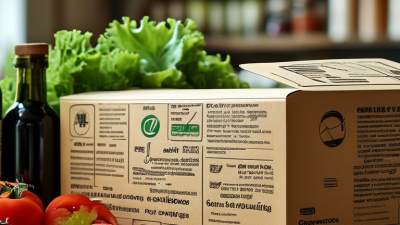
Sure, packaging does a lot to keep products in good shape—it can block air, light, and contaminants, depending on what it's made of and how it's put together. And let's not forget labels: they carry the ingredient list, allergen warnings, storage directions, and dates, so if that text is tiny or smudged, that's a problem. But packaging isn't magic. It can't turn spoiled food into something safe to eat, and the same sturdy wrapper that protects something really well can end up as waste or be nearly impossible to recycle depending on where you live. So yeah, there are real trade-offs here, and they're worth thinking about.
So, when it comes to understanding food packaging, it’s really about looking at both the good and the not-so-good sides. You’ve got material choice, package shape, seals, labeling—they all play a role in how well something performs. Take a flexible pouch, for instance. It might take up less space during shipping than a rigid container, but that doesn’t mean it’s right for every food or that it’ll fit into your local recycling stream. Real-world conditions can throw a wrench in the works. In this guide, we’ll dig into what food packaging actually does, why it matters, and the kinds of questions both businesses and everyday shoppers should be asking when they size it up. Honestly, not every choice has a simple answer—and that’s something worth keeping in mind, you know?
Food Packaging Defined: Materials and Formats Across the Food Supply Chain
Food packaging is the set of materials and formats that contain, protect, identify, and move food from production to use. A sealed pouch, a glass jar, and a paperboard carton solve different problems. The right choice depends on moisture, oxygen, light, temperature, handling, and shelf life. Small details matter.
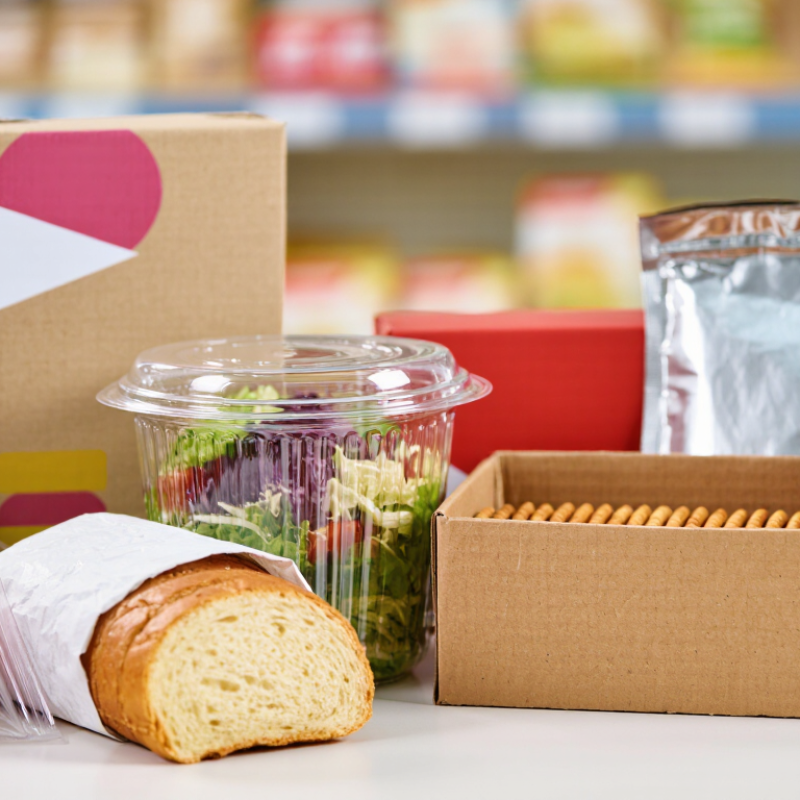
Primary packaging directly holds or touches food: a tray for cut fruit, film around bread, or a can holding soup. Glass provides a strong barrier but adds weight and can break. Metal cans block light and resist impact, while paperboard cartons are light but may need barrier layers. Plastic films can seal tightly and bend around products; performance varies by material and design. No option is perfect.
Secondary packaging groups individual units, such as cartons around yogurt cups. Cases and pallets provide tertiary packaging, helping warehouses and trucks move loads safely. A chilled shipment may need insulation and temperature monitoring; dry pasta usually needs less protection from heat. Food In Packaging choices work best when product safety, transport, opening, storage, and disposal are considered together. That balance is messy. A package may protect food well yet be difficult to recycle locally, so teams should check real transport conditions and how people actually use it.
Three Packaging Levels: Primary, Secondary, and Tertiary Protection
Food packaging is more than a wrapper; it is a system of layers that helps protect food as it moves from production to a kitchen. Each layer has a different job. Together, they can reduce contamination, damage, and avoidable food waste.
Primary packaging directly contains the food. A sealed pouch, jar, or tray can help keep out moisture and air, depending on the food and material. It also gives people a practical way to handle and store the product. Small details matter. A lid that is hard to close, for example, may make storage less reliable after opening.
Secondary packaging groups primary packs for display or handling. A carton holding several snack pouches is one example. It can make products easier to count and move, while offering another surface for storage information. Tertiary packaging supports bulk transport. Corrugated cases on a pallet help stabilize loads during shipping and warehouse handling. Keep them dry. Wet or crushed cases may fail to protect what is inside.
These levels work best when designed together: a sturdy outer case cannot fix a poorly sealed inner pack. Still, extra packaging is not automatically better. Designers need to balance protection, ease of use, and material use for the specific food and supply chain. That balance is not always obvious.
Food-Contact Safety: EU Rules Require Materials Not to Endanger Health
Food packaging does more than keep a product tidy. It may touch food directly, so its materials must be suitable for their intended use. In the European Union, Regulation (EC) No 1935/2004 requires food-contact materials not to endanger health or unacceptably change food’s composition, taste, or smell. Small details matter.
A paper cup, plastic film, or metal lid can behave differently when exposed to heat, fat, or long storage. That is why safety assessments consider the food type, contact time, and temperature. EU rules also require good manufacturing practices, while some materials, such as plastics, have more specific requirements. Food And Packaging decisions should reflect real use, not just how a material looks on a shelf.
Manufacturers and suppliers may use migration testing and supporting documentation to check whether substances move from packaging into food. Results need context: a container tested for cold, brief contact may not be suitable for hot meals stored overnight. It matters. Even careful checks cannot remove every uncertainty, and test conditions may not match every kitchen or supply chain. Clear specifications and traceable records help buyers ask better questions and choose packaging suited to the food and its journey.
Reducing Food Loss: FAO Estimates 13.2% Is Lost Before Retail
Food packaging can help protect food as it moves from farms to shops. The scale of losses before retail makes that role important. The Food and Agriculture Organization estimates that 13.2% of food is lost between harvest and retail worldwide. That figure describes a complex problem, not a packaging failure alone. Poor storage, rough handling, delays, and inadequate cooling can all contribute. Still, a suitable package can reduce bruising, moisture loss, contamination, and exposure to air.
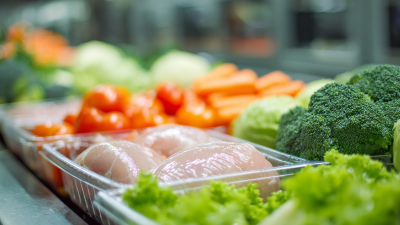
Consider tomatoes packed loosely in a hot truck. They can be crushed or soften before reaching a market. Ventilated crates and careful stacking may help them arrive in better condition. A sealed pouch can also slow drying in some foods, while a sturdy container may prevent damage during transport. The right choice depends on the food, journey, and local storage conditions. More packaging is not automatically better. Extra material can create waste, and a package cannot replace refrigeration or careful handling. It is also easy to assume that a neat package means less loss; that assumption needs checking against actual transport and storage results. A practical solution should protect food without adding material that serves little purpose.
What Is Food Packaging and Why Is It Important? — Reducing Food Loss: FAO Estimates 13.2% Is Lost Before Retail
| Topic | What the data or definition says | Why it matters for packaging |
| Global food loss estimate | FAO estimated that 13.2% of food was lost globally after harvest and before retail in 2021. | Protective packaging can help prevent damage and spoilage during handling, storage, and transport; it is one part of a broader loss-reduction effort. |
| What “before retail” covers | The FAO Food Loss Index tracks losses along the supply chain from post-harvest through, but not including, retail. | Packaging needs to suit the product and each stage it passes through, from packing and storage to distribution. |
| Food packaging | Food packaging contains, protects, preserves, handles, and presents food as it moves through the supply chain. | The format and material should match the food’s protection needs, distribution conditions, and intended use. |
| Physical protection | Packaging can help shield food from crushing, abrasion, leakage, and contamination during handling and transport. | Appropriately sized containers, crates, or cushioning can reduce avoidable physical damage. |
| Fresh produce | Fresh fruit and vegetables are often vulnerable to bruising, compression, and moisture loss. | Ventilated, durable packaging can support careful handling and airflow where required; packaging does not replace suitable temperature management. |
| Dry foods | Grains and other dry foods can be affected by moisture, pests, and contamination during storage. | Suitable barriers and secure closures can help protect product quality when packaging is correctly selected and stored. |
| Temperature-sensitive foods | Many chilled and frozen foods require controlled temperatures throughout storage and distribution. | Insulated or suitable sealed packaging can support temperature control, but a reliable cold chain is also essential. |
| Practical takeaway | Food loss has multiple causes, including handling, storage, transport, and processing conditions. | Choose packaging for the food and supply chain, and pair it with good handling, storage, and temperature practices. |
Source: FAO, “Tracking progress on food and agriculture-related SDG indicators” (2023), reporting the 2021 estimate for SDG indicator 12.3.1a, the Food Loss Index.
Packaging Waste: OECD Reports It Makes Up 40% of Plastic Waste
Food packaging protects food from moisture, oxygen, contamination, and physical damage during storage and transport. It also carries handling and storage information. Yet wrappers, trays, tubs, and films can become waste quickly, sometimes after minutes of use. A heavy footprint. The OECD’s Global Plastics Outlook reports that packaging accounted for 40% of plastic waste generated worldwide in 2019.This figure covers Plastic Packaging overall, not food packaging alone, so it should not be read as a food-specific estimate. Still, it shows how much discarded material comes from short-lived packaging.
The same OECD report estimates that only 9% of plastic waste was ultimately recycled in 2019.
Plastic Food Packaging can be difficult to recycle when it combines materials, uses dark pigments, or carries leftover food. A greasy takeout tray, for example, may be rejected by local sorting systems even when its base material seems recyclable. The package may protect food well, but its end-of-life path is less clear. Better material choices and simpler designs can help, though neither solves waste on its own. Collection systems and consumer habits matter too. The data is stark, but broad global averages hide important differences between materials and places.
Designing for Recovery: The EU Set a 65% Packaging-Recycling Target for 2025
Food packaging protects food from moisture, oxygen, handling, and contamination. It can also carry storage instructions and help people identify what they are buying. A Food Packaging Bag may use several layers for freshness, but those layers can be difficult to separate. Protection matters. So does what happens after use.
The European Union set a target to recycle 65% of packaging waste by weight by 2025. This is an overall target, alongside separate targets for different packaging materials. It does not mean every package placed in a recycling bin will become new material. Collection systems, sorting equipment, and local rules all affect the outcome. A clean paper carton and a flexible, mixed-material pouch may face very different paths.
Packaging design can make recovery easier when it uses fewer material types, clear sorting information, and components that existing facilities can handle. Small details matter: a sleeve that peels away cleanly, or a cap made from a compatible material, can simplify sorting. But there are trade-offs. Removing a barrier layer may shorten shelf life and increase food waste. Designers need to test both protection and end-of-life performance, not assume one clever label solves everything. Recycling guidance can still be confusing. That deserves more attention.
China Stand-Up Pouches: Custom Packaging Solutions from Trusted Suppliers and Factories
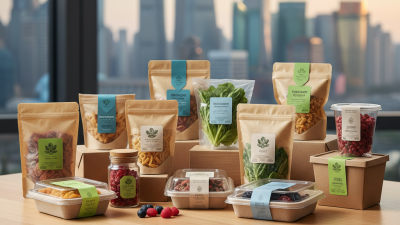
China stand-up pouches combine practical protection with strong shelf appeal. Their expandable bottom gusset lets the package stand upright, improving product visibility while making efficient use of retail space. Made from combinations of plastic films, foil, and paper, pouches can be tailored for different product needs, with options such as resealable closures, clear windows, and custom printing. For buyers comparing suppliers and factories in China, material specifications, seal quality, print consistency, and production capacity are useful points to assess.
Industry data reflects the scale of Flexible Packaging behind this format. The Flexible Packaging Association’s *2023 State of the U.S. Flexible Packaging Industry* report estimated U.S. flexible packaging sales at US$42.9 billion in 2022, representing about 21% of the overall packaging market. This figure covers flexible packaging broadly—not stand-up pouches alone—but illustrates the category’s established role across consumer goods.
Experienced Chinese manufacturers can work with importers and product makers to develop pouch structures suited to their packaging and branding requirements. By coordinating material selection, dimensions, finishes, and print details with trusted suppliers, buyers can source stand-up pouches designed for reliable handling, clear shelf presentation, and efficient packing.
Conclusion
Food Packaging includes the materials and formats used to contain, protect, and move food throughout the supply chain, from production and processing to storage, transport, and sale. Packaging commonly has three levels: primary packaging directly holds the food, secondary packaging groups or protects individual packs, and tertiary packaging helps handle and ship larger quantities. Each level can help preserve product quality, prevent damage, and provide information needed during distribution and use.
Good packaging design must balance food safety, waste reduction, and recovery. Materials that come into contact with food must meet EU requirements and must not endanger human health. Packaging can also help reduce food loss: the FAO estimates that 13.2% of food is lost before retail. At the same time, packaging waste is a major environmental concern, with the OECD reporting that it accounts for 40% of plastic waste. Designing packs for collection and recycling is therefore important; the EU set a target of recycling 65% of packaging waste by 2025.