Leave Your Message
0%

Picking the best Printing Pack for sourcing globally isn’t just about comparing prices — there’s a lot more to consider. The pack needs to do a few things: protect your product, communicate your brand’s message, and hold up during long shipments. For example, a carton that looks flawless in a showroom might arrive scuffed, crushed, or with color shifts after sitting at sea for weeks.

Kevin Howard, a packaging pro, often reminds folks, printing pack should first and foremost protect the product before it promotes the brand. That’s a good rule of thumb for anyone making sourcing decisions. You really want to pay attention to details like the quality of the paperboard, how durable the ink is, whether the fold lines are accurate, resistance to moisture, and if the print holds up consistently. It's also smart to ask for physical samples, factory photos, and test reports before greenlighting production.

Experience is key here. A supplier might boast about their vibrant CMYK colors, but once you get the first big shipment, you might see uneven coverage or seams that aren’t as strong as they should be. It’s easy to underestimate those risks. Companies, retailers, and import teams should compare suppliers based on documentation, clear specs, and consistent quality checks. Responsible sourcing also means reviewing the packaging materials’ recyclability, looking into ethical manufacturing, and making sure all the necessary compliance documents are in order for each market.

Keep in mind, the most technically perfect printing pack isn’t always the cheapest. It’s about finding a good balance between looks, protection, lead time, order minimums, and total landed cost. Pay attention to the small things — like how the packaging performs in humid warehouses, stacked on crowded pallets, or handled repeatedly. Some compromises are inevitable. That’s why testing, gathering feedback, and working with your supplier to improve are so important in making the final call. At the end of the day, a solid global sourcing plan is built on evidence and real-world performance, not just attractive samples.

How to Choose the Best Printing Pack for Global Sourcing?

Define Your Global Printing Pack Requirements

Defining your Printing Pack requirements starts with the product, not the supplier. Record the finished dimensions, weight, opening method, stacking needs, and expected handling conditions. A small glass container may need a rigid insert, while a soft garment may need only a printed sleeve. Specify the substrate, thickness, coating, colors, and finish in measurable terms.

For example: 240 × 160 × 80 millimeters, 350 gsm board, four-color printing, matte coating, and a barcode quiet zone of at least 3 millimeters.

Think beyond appearance. The U.S. Environmental Protection Agency reported that containers and packaging represented 28.1% of municipal solid waste generation in 2018. Material choices therefore deserve documented review. Request recycled content percentages, fiber sources, ink details, and disposal guidance. Requirements also change across destinations. Check language versions, warning symbols, labeling rules, and moisture resistance before requesting quotations. A carton tested in a dry warehouse may fail after six weeks in a humid container.

Keep it measurable.Smithers’ packaging forecasts place the global Packaging Market aboveUS$1 trillion annually, while digital packaging printing is projected to exceed US$36 billion by 2028. These figures indicate wider sourcing options, but they do not remove specification risks. Define acceptable color variation using a recognized tolerance, such as Delta E, and approve a physical sample before mass production. Do not guess. I have seen otherwise accurate files fail because the dieline ignored a folding crease. A strong brief should include tolerances, inspection methods, carton quantities, delivery points, and a realistic replacement plan for damaged units.

Compare Printing Pack Materials, Formats, and Applications

Choosing the right Pack Printing format starts with the product, not the artwork. Paperboard cartons suit dry goods and retail shelves. Flexible films reduce weight and improve barrier protection. Corrugated boxes handle stacking, long-distance shipping, and rough warehouse movement. For liquid products, pouches, cartons, or rigid containers require different sealing tests.

Material decisions also need measurable evidence. Smithers’ The Future of Global Packaging to 2028 estimates the global packaging market will exceed 1.2 trillion dollars by 2028. Growth does not make every option suitable. The OECD reports that packaging creates about 40% of global plastic waste, so recyclability and material reduction deserve early attention. A thinner film may lower freight emissions, yet it can fail during filling. A recyclable structure may also need separate collection systems. The answer is rarely perfect.

Tips: Request samples in the final size. Test compression, moisture, ink adhesion, and barcode readability. Compare delivered cost, not only unit price. Include production waste and transport damage. In global sourcing, confirm language space, color references, and regional disposal guidance before approval. I would also keep one practical warning: laboratory results can look excellent, while a humid warehouse exposes weak seals. Small pilot runs reveal that uncomfortable truth.

Evaluate Print Quality, Customization, and Brand Consistency

How to Choose the Best Printing Pack for Global Sourcing?

Evaluate Print Quality, Customization, and Brand Consistency

A reliable printing pack begins with a physical sample, not a digital promise. Examine fine text, edge sharpness, color density, folding marks, and surface scratches. Ask for proofs under daylight and warehouse lighting. Small color shifts can change the product’s perceived value. In sourcing projects, I compare samples from different production runs. One excellent sample proves very little. A repeatable process matters more.

Customization should support function, not merely decoration. Check whether the supplier can adjust dimensions, finishes, inserts, labels, and packing methods. Request a dieline with exact measurements before production. Test the pack with the real product inside. Does it slide, bend, or crush during handling? These details expose weaknesses early. I once trusted a strong-looking carton that failed after repeated stacking. That mistake was avoidable.

Brand consistency requires controlled specifications across factories and regions. Use an approved color reference, material description, artwork version, and tolerance range. Record ink systems, coating types, and finishing processes. Keep signed samples for future inspections. A shared quality checklist makes communication clearer, especially across languages and time zones. Still, consistency is not automatic. Paper batches vary, machines drift, and rushed approvals create gaps. Build inspection points into the schedule, and leave room for honest rechecking.

Check Supplier Capabilities, Certifications, and Production Standards

When selecting a Plastic Bag Pack for global sourcing, inspect the supplier’s real production capacity, not only its catalog. Ask for machine lists, monthly output, material specifications, and recent batch records. A capable factory should explain film thickness, sealing temperature, printing tolerance, and rejection rates clearly. Request samples from normal production, not specially prepared pieces. Check seal strength, odor, color consistency, and drop performance with your own checklist.

Certifications provide useful evidence, but they are not a guarantee. The ISO Survey 2023 reported more than 1.2 million ISO 9001 certificates worldwide. That number shows broad adoption, yet a certificate cannot replace an audit. Verify its scope, issuing body, expiry date, and covered facility. For packaging, ISO 9001 supports quality control, while ISO 14001 indicates an environmental management system. Food-contact applications may also require recognized packaging-material standards and destination-market testing. Documentation must match the actual factory.

Production standards should include incoming-material inspection, in-process measurements, batch traceability, and final sampling. The OECD’s Global Plastics Outlook reported 353 million tonnes of plastic waste in 2019, with packaging representing about 40 percent. This makes recycled-content claims and material declarations worth checking carefully. Ask for test reports, but confirm laboratory identity and sample dates. I once treated a polished certificate as proof of reliability. That was too optimistic. Supplier performance still depends on operator training, maintenance, and honest reporting when a batch fails. Shortcuts appear expensive later.

Assess International Shipping, Packaging, and Regulatory Compliance

Choosing the best printing pack starts with the route, not the artwork. UNCTAD’s Review of Maritime Transport 2024 states that maritime shipping carries over 80% of global merchandise trade by volume. A carton crossing humid ports needs compression strength, scuff resistance, and readable shipping marks. Request evidence from stacking, vibration, and moisture tests. ISTA protocols can guide this work, but they do not replace destination requirements. Small errors travel.

For a Retort Pack, assess seal integrity, oxygen barriers, moisture barriers, and thermal-process tolerance before selecting printing inks. The pack may face 121°C retort cycles, sharp corners, and condensation. Specify food-contact declarations, migration testing, lot traceability, and controlled color proofs. The OECD’s Global Plastics Outlook reports 353 million tonnes of plastic waste in 2019, with only 9% recycled. Material reduction and recyclable structures therefore deserve technical review. A thinner film is not automatically better.

Compliance files should match each market’s language, labeling, recycling marks, producer duties, and restricted-substance rules. The EU Packaging and Packaging Waste Regulation, Regulation (EU) 2025/40, generally applies from 12 August 2026. Old specifications may age badly. Check customs documents, HS classification, pallet dimensions, and extended producer responsibility obligations with local specialists. The World Bank’s Logistics Performance Index 2023 shows uneven customs and infrastructure performance across markets. Build buffer time into launch plans. Approve a pilot shipment, too. It costs more upfront, but recorded failures reveal more than assumptions.

Calculate Total Costs, Lead Times, and Long-Term Supplier Value

How to Choose the Best Printing Pack for Global Sourcing?

Calculate Total Costs, Lead Times, and Long-Term Supplier Value

The cheapest printed pack rarely has the lowest total cost. Build a landed-cost model before comparing quotations. Include unit price, plates, tooling, freight, duties, inspection, storage, payment fees, and rejected units. A realistic example can change the decision: a 0.03-dollar saving may disappear after airfreight or colour rework. The WTO’s World Trade Statistical Review 2024 recorded a 1.2% decline in global merchandise trade volume in 2023. Such volatility makes freight and inventory assumptions important.

Lead time needs more than a factory promise. Measure artwork approval, proofing, material purchasing, production, quality checks, customs, and delivery separately. The World Bank Logistics Performance Index 2023 assessed 139 economies across six logistics dimensions. Use that evidence when selecting routes and backup suppliers. Then score suppliers on defect rates, response time, audit results, capacity, payment flexibility, and improvement history. Long-term value is not just a lower quote. It is fewer surprises.

Tips: Request a landed-cost worksheet with fixed assumptions. Ask for three recent delivery records. Keep a small buffer for colour correction. Do not trust perfect forecasts. A spreadsheet can still lie when demand changes. Recheck currency, freight, and rejection rates monthly. I have seen buyers overvalue a polished sample and undervalue slow communication. That mistake is easy to repeat.

How to Choose the Best Printing Pack for Global Sourcing?

Compare estimated landed cost, production lead time, and long-term supplier value before selecting a printing pack.

The comparison uses practical global-sourcing benchmark estimates per 1,000 packs. Landed cost includes packaging, tooling allocation, international freight, import charges, and quality inspection. Supplier value is a 0–100 score based on lead-time reliability, quality consistency, flexibility, communication, and reorder stability.

How YZ Pack’s Printed Plastic Roll Film Enhances Food Branding and Packaging Appeal

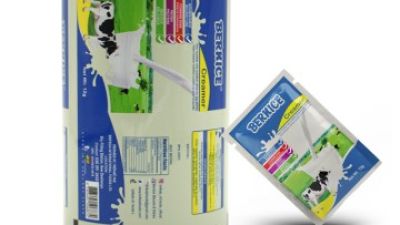
Printed plastic roll film plays an important role in strengthening food branding while protecting product quality. With high-resolution printing, manufacturers can present attractive colors, clear product information, nutritional details, and distinctive visual elements directly on the packaging. This creates a consistent brand image on retail shelves and helps food products appear more recognizable, professional, and appealing to consumers.

For milk powder packaging, a multilayer structure can provide both visual impact and reliable protection. The plastic layer offers flexibility, strong heat-sealing performance, and resistance to moisture, while the aluminum foil layer helps block light and oxygen. Together, these materials reduce the risk of moisture absorption, oxidation, and quality deterioration during storage and transportation. The roll format also supports efficient filling and packaging operations, making it suitable for different bag sizes and production requirements.

The outer printed surface can be customized with vibrant graphics, clean typography, usage instructions, and freshness-related information without compromising the protective inner layers. A well-designed film structure combines packaging performance with shelf appeal, helping milk powder maintain its intended condition while giving consumers a clear and attractive product presentation.

FAQS

How should I choose a packaging material?

Start with the product, not the artwork. Paperboard suits dry goods and retail shelves. Flexible film reduces weight and adds barrier protection. Corrugated boxes support stacking and shipping. Liquid products need careful sealing tests.

Why should I request samples in the final size?

Full-size samples reveal folding, crushing, and filling problems. A small sample can hide weak corners. Test the actual product inside. Digital artwork cannot show every physical risk.

Which tests are useful before production?

Test compression, moisture resistance, ink adhesion, and barcode readability. Check surface scratches and folding marks. Repeat the tests after transport simulation. Laboratory results can still miss humid warehouse failures.

How can I compare packaging costs accurately?

Compare delivered cost, not only unit price. Include production waste, transport damage, and packing labor. A cheaper unit may create higher replacement costs. The cheapest option may fail later.

What should I check for printing quality?

Inspect fine text, sharp edges, color density, and surface finish. Request proofs under daylight and warehouse lighting. Small color shifts can change perceived product value. One perfect sample proves little.

How can packaging customization remain practical?

Confirm dimensions, finishes, inserts, labels, and packing methods. Request a dieline with exact measurements. Test whether the pack slides, bends, or crushes during handling. Decoration should not weaken performance.

How can visual consistency be controlled across regions?

Use approved color references, material descriptions, artwork versions, and tolerance ranges. Record ink systems, coatings, and finishing processes. Keep signed samples for later inspections. Machines drift.

What should global packaging projects confirm before approval?

Confirm language space, color references, disposal guidance, and regional packing requirements. Build inspection points into the schedule. Leave time for rechecking. Rushed approvals create avoidable gaps.

Conclusion

Choosing the best Printing Pack for global sourcing begins with clearly defining your product, market, quantity, size, material, and functional requirements. Compare suitable materials, formats, finishes, and applications to ensure the pack protects its contents while supporting practical handling and a professional presentation. Print quality, color accuracy, customization options, and brand consistency should also be reviewed carefully, especially when production is distributed across different markets.

Supplier evaluation is equally important. Confirm production capacity, quality-control systems, relevant certifications, and manufacturing standards before placing an order. Consider international shipping methods, protective outer packaging, labeling needs, and destination-market compliance requirements. Finally, calculate the complete cost, including production, tooling, transport, duties, inspection, and possible rework. Comparing lead times, communication, flexibility, and long-term reliability will help you select a supplier that delivers consistent value, reduces supply-chain risks, and supports sustainable global growth.


Clara

Clara

Clara is a dedicated marketing professional at Jieyang Yuanzhong Color Printing Co., Ltd., where she plays a pivotal role in promoting the company’s innovative products and services. With a deep understanding of the printing industry, Clara specializes in creating engaging content that highlights......
Previous How to Choose the Right Food Packaging Supplier