When global buyers start mapping out their 2026 sourcing plans, Seal Packaging is one of those things worth a closer look. A closure isn't just a final touch. It helps protect product quality, keeps traceability intact, and can affect transport costs.
Smithers' The Future of Global Packaging to 2028 points to continued growth in flexible and convenience packaging. Grand View Research also names flexible packaging as a major market, driven by food, healthcare, and personal care demand. So it's no surprise that heat seals, induction seals, tamper-evident bands, spouted pouches, and resealable closures are getting more attention. But just because a market is growing doesn't mean every format fits.
The application decides.
A glass jar might need an induction liner for leak resistance and freshness. A stand-up pouch may need a reliable heat seal that works across a wider production window. For pharma, seal integrity and documented testing matter far more than pretty graphics. Before approving samples, buyers should look at oxygen transmission, moisture protection, seal strength, filling temperature, and opening performance.
The Sustainable Packaging Coalition and the Ellen MacArthur Foundation both stress material efficiency and circular design. That means packaging teams should compare mono-material structures, recyclable films, and compatible closures. A lighter package can still fail if it wrinkles near the seal. And small defects? They get expensive fast during ocean transport.
No format wins every route.
In real life, supplier claims need independent verification. ASTM International methods, production trials, and third-party inspection can uncover weaknesses that brochures tend to hide. This is where a lot of purchasing plans still fall short. Cost, recyclability, shelf life, and consumer convenience often pull in different directions. A careful 2026 decision should weigh those trade-offs, not just chase the newest packaging trend.
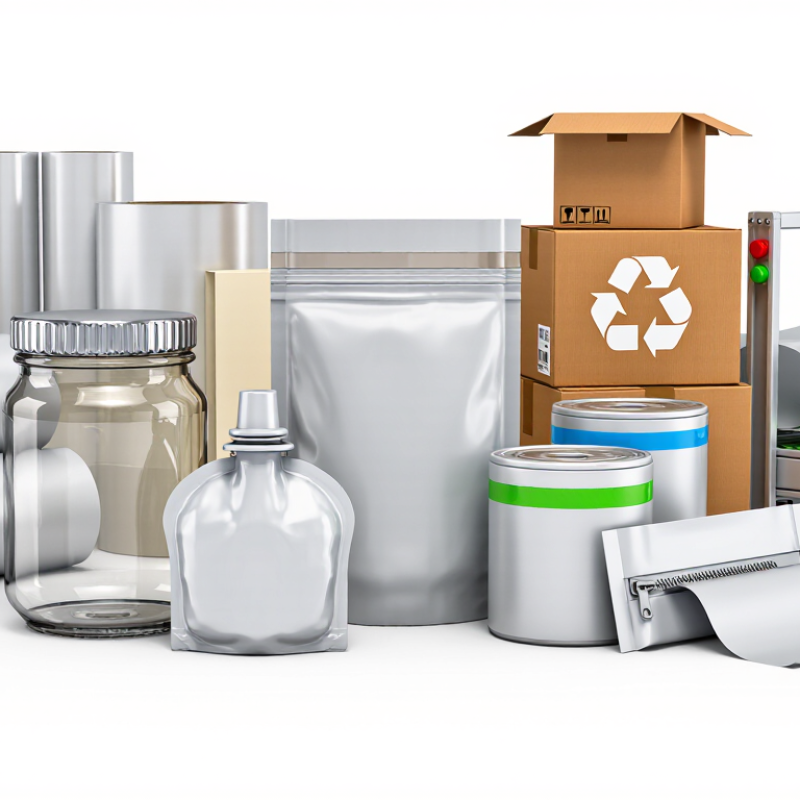
Seal Packaging is the structure that closes a pack and protects its contents from air, moisture, dust, and leakage. APackaging Seal may use heat, pressure, induction, adhesive layers, or a zipper profile. Each method suits different materials, filling speeds, and transport conditions.
For global buyers, the seal is a risk-control point, not a decorative detail. A weak seal can fail inside a humid container, while an overly strong seal can frustrate consumers and damage the film. Smithers’ The Future of Global Packaging to 2028 places annual global packaging demand above US$1 trillion, showing the scale of this responsibility. Small sealing errors can become expensive across international shipments. Testing should include seal strength, burst resistance, aging, temperature changes, and repeated handling. ASTM F88 is widely used for measuring flexible package seal strength. ISO 11607 also guides packaging validation for sterile barrier systems.
Material choices need careful reflection. Recyclable mono-material films may simplify recovery, but they can require narrower sealing windows. Multi-layer structures often seal reliably, yet recycling can become more complicated. Not always better. Buyers should request test conditions, production tolerances, migration declarations, and batch records. A clear seal specification prevents confusion between laboratory performance and factory reality. PMMI’s Packaging Compass reports continued investment in automation and packaging efficiency, but automation cannot correct poor seal design. The machine only repeats the decision.
For global buyers, seal packaging differs less by appearance than by how its layers close, hold, and fail. In Seal Food Packaging, heat-sealed pouches bond plastic layers with controlled temperature, pressure, and dwell time. Their flat seams suit powders, snacks, and frozen products. A wider seal can tolerate minor filling dust, but it consumes more material. Not always better.
Induction seals use a foil-lined liner bonded to a container mouth by electromagnetic heating. They provide a clean inner barrier against moisture, oxygen, and leakage, especially for jars and bottles. Opening leaves visible evidence.
Pressure-sensitive liners rely on adhesive contact, so they need a dry, smooth rim and accurate compression. They are convenient for dry goods, but heat and rough handling can weaken their hold.
Tamper-evident bands sit outside the closure and show tearing during first opening. They add visible reassurance, yet they do not replace a true leak seal.
Selection should match product behavior, filling equipment, transport vibration, and storage climate. A buyer should request seal-strength, leak, and aging data from suppliers, not only attractive samples. I have seen packaging pass a room-temperature check and fail after cold storage. That gap deserves attention. Film thickness, liner fit, and production speed can change performance. Regional recycling systems may also affect the practical choice. Testing with the actual product remains wiser than trusting a standard sample.
Modern seal packaging relies on engineered layers, not one material. Polyethylene (PE) provides flexible heat sealing and moisture resistance. Polypropylene (PP) tolerates higher filling temperatures and offers good stiffness. PET adds strength, print clarity, and dimensional stability. In many pouches, these polymers work together. A Plastic Packaging Seal may look simple, but its performance depends on seal temperature, pressure, and dwell time. Small changes matter.
Aluminum foil remains valuable when oxygen, light, and moisture protection are critical. It often sits inside a laminate with PE or PP, which creates the sealable inner surface. Paper-based structures can improve tactile appeal, yet they usually need coatings or polymer layers for reliable sealing. EVOH can reduce oxygen transmission, although humidity may weaken its barrier performance. I have found that material datasheets rarely tell the whole story. Actual production trials expose wrinkles, weak corners, and leaks.
For trays and lidding films, PET, PP, and coated paper are common choices. Sealants must match the tray, product temperature, and intended storage conditions. Recyclability also deserves careful review, because multilayer structures can be difficult to separate. A thinner package is not automatically better. It may tear during transport. Designers should test drop resistance, seal strength, opening force, and shelf-life performance. No material is perfect. Even a clear, attractive seal can fail when condensation forms along the edge.
For global buyers, seal strength, safety, and shelf life matter more than packaging appearance. Common choices include heat-sealed pouches, lidding films, sachets, and retort-ready packs. Each design behaves differently under pressure, humidity, and temperature changes. No seal wins everywhere.
Compare seals using ASTM F88 peel or burst testing, not hand-pulling alone. Record the force across several production lots. A high result can still hide channel leaks or weak corners. ISO 11607 also requires packaging systems to maintain sterility through handling and distribution. For food applications, review oxygen and water-vapor transmission rates. These values help predict texture loss, oxidation, and spoilage. The FAO’s 2019 State of Food and Agriculture report estimates that 14% of food is lost between harvest and retail. Better barrier packaging may reduce part of that loss, but it cannot fix poor storage.
Tips: Ask for test conditions, seal width, temperature, dwell time, and failure mode. Request migration documentation and tamper-evidence checks. Test samples after cold storage, stacking, vibration, and repeated opening. Small details matter. A laboratory seal may look perfect, yet fail after a long sea shipment. I have found that buyers often compare price too early. The wiser comparison includes rejected units, shelf-life claims, and real distribution data. Even then, uncertainty remains.
The comparison below presents typical performance ranges for commonly used seal packaging formats. Actual results depend on material structure, seal design, product characteristics, filling conditions, and validation testing.
| Packaging Type | Typical Seal Structure | Typical Seal Strength | Typical Shelf-Life Capability | Safety and Barrier Performance | Main Advantages | Main Limitations | Best-Fit Applications |
|---|---|---|---|---|---|---|---|
| PE or PP Mono-Material Pouch | Single-layer or coextruded polyethylene or polypropylene film | Approximately 10–30 N/15 mm, depending on film grade and seal conditions | Usually 6–18 months for dry or moderate-barrier products | Good moisture resistance; oxygen and light protection vary by grade and coating | Lightweight, recyclable-structure potential, flexible sealing window, and efficient material use | Lower oxygen and light barrier than foil-based structures unless enhanced with coatings or barrier layers | Snacks, frozen food, powders, household products, and short-to-medium shelf-life goods |
| PET/PE Laminated Pouch | Printed polyester outer layer laminated to polyethylene sealing layer | Approximately 15–35 N/15 mm | Commonly 9–24 months, subject to oxygen and moisture requirements | Good puncture resistance, print protection, and moisture barrier; moderate oxygen barrier | Strong graphics, good mechanical durability, and reliable heat-seal performance | Multilayer construction can make recycling more difficult; not suitable for all high-temperature processes | Coffee, confectionery, dry foods, personal-care products, and consumer goods |
| Aluminum Foil Laminate Pouch | Polyester or nylon outer layer, aluminum foil barrier layer, and PE or CPP sealant | Approximately 15–40 N/15 mm | Often 12–36 months when properly designed and hermetically sealed | Excellent barrier against oxygen, moisture, light, and aroma transfer | Strongest protection for sensitive products and long-distance distribution | Higher material cost, limited recyclability, and possible foil cracking if sharply folded or flexed | Coffee, pharmaceuticals, nutritional powders, dehydrated foods, and oxygen-sensitive products |
| Retort Pouch | Heat-resistant multilayer film, commonly including polyester, aluminum or high-barrier layer, and CPP sealant | Approximately 20–40 N/15 mm after retort processing, depending on construction | Typically 12–36 months for commercially sterilized products | Designed for hermetic sealing and thermal processing at approximately 116–130°C; requires validated process control | Long shelf life, reduced package weight, and lower transport volume than metal cans | Requires specialized materials, filling equipment, retort validation, and careful handling to prevent flex cracking | Ready-to-eat meals, sauces, seafood, meat products, and shelf-stable wet foods |
| Induction-Sealed Container | Container neck with a heat-sealed foil or polymer liner under a screw or snap cap | Commonly measured by torque, peel force, and leak testing; performance is application-specific | Approximately 6–24 months, depending on container, liner, and product formulation | Tamper evidence, leak resistance, and improved protection against moisture and oxygen ingress | Clear tamper indication, convenient opening, and compatibility with bottles and jars | Requires precise liner-to-container compatibility, induction settings, and controlled cap application | Pharmaceuticals, nutraceuticals, sauces, powders, cosmetics, and liquid supplements |
| Cold-Seal Film Package | Pressure-sensitive cohesive coating applied to flexible film surfaces | Approximately 3–15 N/15 mm, depending on cohesive formulation and dwell pressure | Generally 3–12 months for products with moderate barrier requirements | Good product protection when correctly designed; barrier depends mainly on the base film | Fast packaging speeds, low energy use, and reduced heat exposure for heat-sensitive products | Seal performance can be affected by dust, grease, coating contamination, and storage temperature | Chocolate, biscuits, bakery items, snack bars, and confectionery |
| Spouted Stand-Up Pouch | Flexible multilayer pouch with heat-sealed fitment and cap | Approximately 15–35 N/15 mm for body seals; fitment seal requires separate leak validation | Commonly 6–24 months, depending on barrier film and closure design | Good resealability and spill control; barrier performance varies widely by laminate | Convenient dispensing, lower package weight, and improved consumer usability | Fitment and corner areas can be potential leak points; difficult to recycle when made from mixed materials | Baby food, beverages, sauces, detergents, pet food, and personal-care liquids |
Global buyers should treat seal packaging as a compliance decision, not only a material choice. ISO 11607 guides sterile barrier packaging for medical products. ASTM F88 measures seal strength, while ASTM F1929 detects channels through dye penetration. ASTM F2096 evaluates gross leaks with bubble emission testing.
Food and consumer packaging may require food-contact compliance in the destination market. Requirements can differ across regions, especially for adhesives, inks, coatings, and recycled content. A sealant approved for one market may need additional migration testing elsewhere. Check temperature limits, storage humidity, and filling-line speed before selecting a structure. A strong seal is not automatically a suitable seal.
Details matter. Record jaw temperature, pressure, dwell time, and peel direction during validation. Test samples after aging, transport vibration, and cold storage. For example, a pouch stored at 5°C may peel differently from one tested at room temperature. Packaging teams sometimes trust supplier data too quickly. That is risky. Film thickness variation, dust in the seal area, and uneven product loading can change results. We still need practical trials, because laboratory conditions rarely match every factory. A clear specification should identify the sealing window, acceptance limits, test method, and responsible laboratory. Local labeling, recycling, and chemical restrictions also deserve review before mass production.
The chart compares the reference edition years of selected standards commonly used when choosing and validating sealed packaging. ISO 11607 focuses on sterile barrier materials and packaging systems, while ISO 11607-2 addresses forming, sealing and assembly-process validation. ASTM methods support seal-strength, dye-penetration, bubble-leak and package-integrity testing. Buyers should confirm the current edition and applicable regulatory requirements before final specification.
Global buyers should choose seal packaging by product sensitivity, handling conditions, and market expectations. A dry powder may need a Seal Plastic Bag with strong heat seals and low dust leakage. Fresh products often require barrier layers that limit moisture, oxygen, or light. Sharp edges need puncture resistance, not just attractive printing. For frozen shipments, test seal strength after cold exposure. For humid routes, include compression and drop tests. Good packaging protects the product before it reaches a shelf.
Experience matters. In packaging trials, a seal that looked secure at room temperature failed after repeated opening. That result changed the specification. Buyers should request samples, inspect seal width, and test real filling speeds.
They should also confirm food-contact suitability, migration data, labeling duties, and recycling requirements for each destination. These checks may feel slow. They prevent expensive surprises.
Tips: Match the opening style with user habits. Choose resealable features for repeated use. Use tamper evidence when product integrity matters. Compare film thickness with actual damage records, not guesses. Ask suppliers for test methods and recent quality reports. A clear specification should state dimensions, material structure, seal temperature, tolerance, and inspection frequency.
Market conditions can change the best choice. A lightweight pouch may reduce freight weight but offer less puncture protection. A rigid container may perform better in retail displays but consume more storage space. Buyers should balance protection, cost, machinery compatibility, and disposal systems. I would not approve a format from appearance alone. Small pilot runs reveal awkward filling, weak corners, and customer complaints. Leave room for revision.
# Printed Plastic Roll Film for Milk Powder Packaging: Factory-Direct Quality, Safety, and Performance Guide
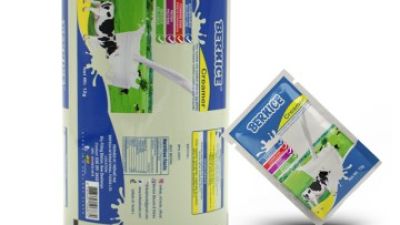
Global dairy production is projected to exceed 930 million metric tons annually, according to the USDA Foreign Agricultural Service’s *Dairy: World Markets and Trade* report. This scale highlights the need for dependable packaging that protects milk powder during storage, transportation, and retail handling. Our factory-direct printed plastic roll film is developed specifically for milk powder packaging, combining practical performance with customized printing and efficient roll-form delivery.
The film uses a multi-layer structure with a strong plastic sealing layer and an aluminum foil barrier layer. The plastic layer supports reliable heat sealing and helps prevent moisture ingress, while aluminum foil blocks light and oxygen—two major factors that can accelerate oxidation and quality loss. This is especially important because the Codex Standard for Milk Powders and Cream Powder specifies a maximum moisture content of 5%, making moisture protection a critical packaging requirement.
Manufactured in China, our packaging film can be tailored to different filling machines, bag sizes, artwork requirements, and production volumes. Factory-direct supply helps improve consistency, shorten communication cycles, and support stable quality control from raw materials to finished rolls. With suitable barrier performance and precise sealing, the film helps preserve milk powder’s safety, texture, flavor, and nutritional value throughout its intended shelf life.
It closes the package and helps block air, moisture, dust, and leakage. A small gap can ruin contents during shipping.
Containers face humidity, pressure, temperature changes, and repeated handling. A weak seal may fail far from the production site.
Heat, pressure, adhesive, induction, and zipper seals suit different materials. The filling process and product sensitivity should guide the choice.
Request samples and test seal strength, burst resistance, aging, cold exposure, and repeated handling. Room-temperature testing alone is not enough.
State the material structure, dimensions, seal width, temperature, tolerance, and inspection frequency. Include test conditions and batch records.
Dry powders need strong seals that control dust leakage. Fresh products may need barriers against moisture, oxygen, or light.
Filling may become awkward, corners may weaken, or seals may fail after opening. These findings are inconvenient, but useful.
Not necessarily. It may lower freight weight but provide less puncture protection. A heavier format can waste storage space.
Mono-material films may simplify recovery but often have narrower sealing windows. Multi-layer films can seal reliably, yet recycling becomes harder.
Check food-contact suitability, migration information, recycling duties, and real damage records. Attractive printing proves very little.
Seal Packaging is a critical part of modern product protection, helping preserve quality, prevent contamination, and support safe handling throughout global supply chains. This overview explains the main packaging structures, including pouches, lidded trays, bags, films, and containers, and shows how their designs suit different product types and distribution conditions. It also examines common materials such as plastic films, aluminum layers, paper-based laminates, and recyclable or high-barrier alternatives.
For global buyers, selecting the right Seal Packaging requires more than comparing appearance and price. Buyers should evaluate seal strength, leak resistance, tamper evidence, moisture and oxygen barriers, temperature tolerance, shelf life, and compatibility with filling equipment. Packaging decisions must also reflect destination-market requirements, labeling expectations, recycling systems, transport conditions, and relevant food-contact or product-safety standards. By balancing performance, sustainability, compliance, and total cost, buyers can choose packaging that protects products effectively while meeting the practical needs of manufacturers, distributors, retailers, and end users worldwide.